Introduction
On Page SEO is one of the most important aspects of Search Engine Optimization (SEO). It involves optimizing individual web pages to improve their rankings in search engines and attract more organic traffic. Unlike Off Page SEO, which focuses on external factors like backlinks, On Page SEO focuses on elements that can be optimized directly on your website.
A well-optimized website helps search engines understand your content better and provides a better user experience. By implementing effective On Page SEO techniques, website owners can improve visibility, increase traffic, and achieve higher rankings on Google.
In this guide, you will learn what On Page SEO is, why it is important, and the best practices to optimize your website successfully.
What is On Page SEO?
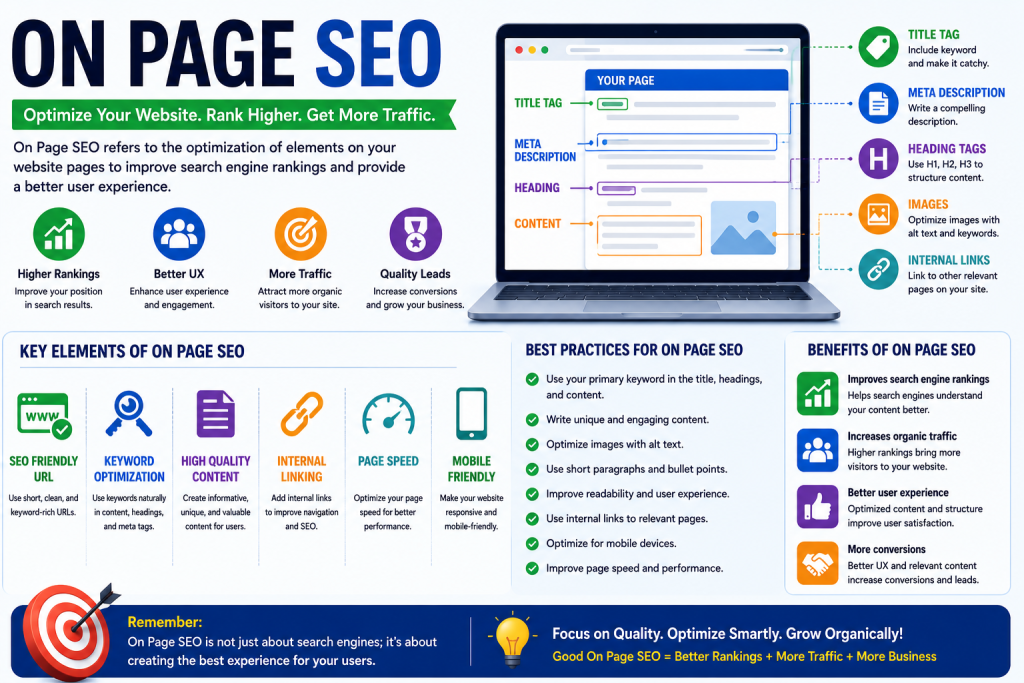
On Page SEO refers to the process of optimizing web page content, HTML source code, and website elements to improve search engine rankings. It includes optimizing keywords, headings, meta tags, URLs, images, and internal links.
The primary goal of On Page SEO is to make web pages more relevant and useful for both users and search engines.
Some common On Page SEO elements include:
- Title Tags
- Meta Descriptions
- Headings (H1, H2, H3)
- Keyword Optimization
- URL Structure
- Internal Linking
- Image Optimization
- Content Quality
Why is On Page SEO Important?
On Page SEO plays a critical role in helping search engines understand your content.
1. Improves Search Engine Rankings
Proper On Page SEO helps search engines determine the relevance of a page, increasing the chances of ranking higher.
2. Enhances User Experience
Optimized content and website structure make it easier for users to navigate and find information.
3. Increases Organic Traffic
Higher rankings often result in increased organic traffic from search engines.
4. Helps Search Engines Understand Content
Search engines use On Page SEO elements to identify the topic and purpose of a webpage.
5. Improves Conversion Rates
A user-friendly and optimized webpage can encourage visitors to take desired actions.
Key Elements of On Page SEO
1. Title Tags
The title tag is one of the most important ranking factors in On Page SEO. It tells users and search engines what the page is about.
Best Practices:
- Include the primary keyword.
- Keep it under 60 characters.
- Make it attractive and relevant.
Example:
On Page SEO: Complete Guide for Beginners
2. Meta Description
A meta description summarizes the content of a page.
Best Practices:
- Include the primary keyword.
- Keep it between 150–160 characters.
- Write compelling descriptions.
3. Heading Tags
Headings organize content and improve readability.
Types of Headings:
- H1: Main title
- H2: Main sections
- H3: Subsections
Using headings properly is an important part of On Page SEO.
4. Keyword Optimization
Keywords help search engines understand page content.
Tips:
- Use the primary keyword naturally.
- Include keywords in headings.
- Avoid keyword stuffing.
For this article, the primary keyword is On Page SEO.
5. SEO-Friendly URLs
URLs should be simple and descriptive.
Good Example:
yourwebsite.com/on-page-seo-guide
Bad Example:
yourwebsite.com/page?id=12345
Short and keyword-rich URLs improve On Page SEO.
6. Internal Linking
Internal links connect pages within the same website.
Benefits:
- Improves navigation
- Distributes link authority
- Helps search engines crawl pages
7. Image Optimization
Images enhance user experience and engagement.
Best Practices:
- Compress images
- Add descriptive file names
- Use alt text containing relevant keywords
8. Content Quality
High-quality content is the foundation of successful On Page SEO.
Your content should be:
- Informative
- Unique
- Relevant
- Easy to read
- Updated regularly
Best On Page SEO Techniques
Create Valuable Content
Content should solve user problems and answer search queries effectively.
Use Keywords Naturally
Include keywords without overusing them.
Optimize Images
Compressed and optimized images improve page speed and user experience.
Improve Page Speed
Fast-loading pages rank better and provide a better user experience.
Use Mobile-Friendly Design
Most users access websites through mobile devices, making mobile optimization essential.
Add Internal Links
Link related articles to improve navigation and SEO.
Write Engaging Meta Tags
Compelling titles and descriptions improve click-through rates.
Common On Page SEO Mistakes
Many beginners make mistakes that can negatively affect rankings.
Keyword Stuffing
Using the same keyword repeatedly can harm SEO performance.
Duplicate Content
Search engines prefer original and unique content.
Missing Meta Tags
Pages without title tags or meta descriptions may lose ranking opportunities.
Slow Page Speed
A slow website can increase bounce rates and reduce rankings.
Poor Mobile Optimization
A non-responsive website may perform poorly in search results.
Broken Internal Links
Broken links create a poor user experience and affect crawlability.
Tools for On Page SEO
Several tools can help improve On Page SEO performance.
Google Search Console
Monitors website performance and indexing.
Google Analytics
Tracks visitor behavior and traffic sources.
Yoast SEO
Popular WordPress plugin for On Page SEO optimization.
SEMrush
Provides keyword research and SEO analysis.
Ahrefs
Helps analyze keywords and website performance.
Screaming Frog
Useful for technical and On Page SEO audits.
Benefits of On Page SEO
A strong On Page SEO strategy offers many benefits:
- Higher search engine rankings
- Increased organic traffic
- Better user experience
- Improved website visibility
- Higher conversion rates
- Faster indexing
- Better website structure
These benefits contribute to long-term SEO success and sustainable website growth.
On Page SEO vs Off Page SEO
| On Page SEO | Off Page SEO |
|---|---|
| Performed on the website | Performed outside the website |
| Focuses on content optimization | Focuses on authority building |
| Includes keywords and meta tags | Includes backlinks and brand mentions |
| Improves website structure | Improves website reputation |
Both strategies work together to improve overall SEO performance.
Conclusion
On Page SEO is a fundamental part of every successful SEO strategy. It helps search engines understand your content while improving user experience and website performance. By optimizing title tags, meta descriptions, content, images, URLs, and internal links, businesses can improve search rankings and attract more organic traffic.
Implementing effective On Page SEO techniques requires consistency and attention to detail. When done correctly, On Page SEO can significantly increase website visibility, improve user engagement, and contribute to long-term online success.