Introduction
In today’s digital world, having a website is not enough. If people cannot find your website online, it becomes difficult to attract visitors, generate leads, or grow your business. This is where SEO plays an important role.
SEO stands for Search Engine Optimization. It is the process of improving a website so that it ranks higher on search engines like Google, Bing, and Yahoo. The better your website ranks, the more organic traffic you can receive.
This guide will help you understand what SEO is, why it is important, and how it works.
What is SEO?
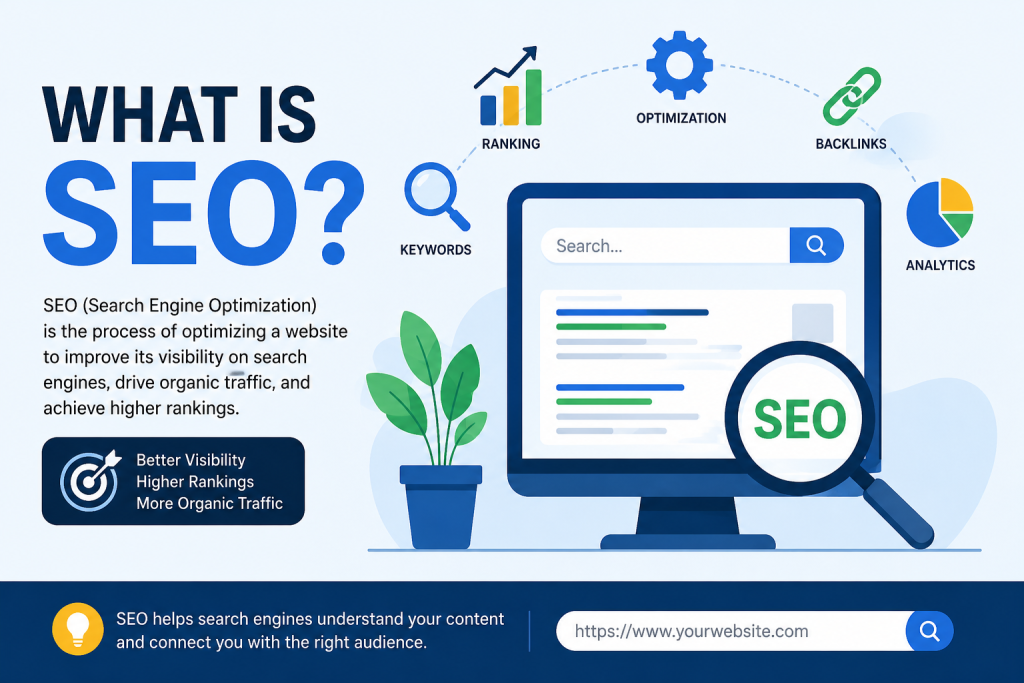
SEO is the practice of optimizing a website to improve its visibility in search engine results pages (SERPs). When users search for information, products, or services online, search engines display the most relevant results. The goal of SEO is to make your website appear among those top results.
For example, if someone searches for “digital marketing course,” websites that have strong SEO are more likely to appear on the first page of Google.
SEO focuses on improving different aspects of a website, including content, technical structure, user experience, and backlinks.
Why is SEO Important?
SEO is important because it helps websites attract organic traffic without paying for advertisements. Most users click on results that appear on the first page of Google, making higher rankings valuable for businesses and website owners.
Some major benefits of SEO include:
- Increased website visibility
- Higher organic traffic
- Better user experience
- Improved brand credibility
- Higher conversion rates
- Long-term marketing benefits
A well-planned SEO strategy can help businesses reach their target audience and grow online.
How Search Engines Work
Before understanding SEO, it is important to know how search engines work.
Search engines follow three main steps:
1. Crawling
Search engines use bots or spiders to discover webpages across the internet.
2. Indexing
After crawling, the information is stored in a database called an index.
3. Ranking
When users search for something, search engines analyze indexed pages and display the most relevant results.
The purpose of SEO is to help search engines understand your content and rank it higher for relevant searches.
Types of SEO
There are several types of SEO that work together to improve website performance.
1. On-Page SEO
On-Page SEO refers to optimizations made directly on a webpage.
Examples include:
- Optimizing title tags
- Writing meta descriptions
- Using headings properly
- Adding target keywords
- Improving content quality
- Internal linking
On-Page SEO helps search engines understand the content of a webpage.
2. Off-Page SEO
Off-Page SEO includes activities performed outside the website to improve authority and trust.
Examples include:
- Link building
- Guest posting
- Social media sharing
- Brand mentions
Backlinks from trusted websites are an important part of Off-Page SEO.
3. Technical SEO
Technical SEO focuses on improving the technical aspects of a website.
Examples include:
- Website speed optimization
- Mobile responsiveness
- XML sitemap creation
- Robots.txt optimization
- HTTPS security
- Fixing crawl errors
Technical SEO ensures that search engines can easily access and understand website pages.
4. Local SEO
Local SEO helps businesses appear in location-based searches.
For example, when someone searches for “digital marketing institute near me,” local SEO helps businesses rank for that search.
Important SEO Ranking Factors
Search engines use hundreds of ranking factors to determine where a webpage should appear.
Some important SEO ranking factors include:
Quality Content
Content remains one of the most important aspects of SEO. High-quality content provides value to users and answers their questions effectively.
Keywords
Keywords help search engines understand the topic of your content. Proper keyword research is essential for successful SEO.
Backlinks
Backlinks act as votes of confidence from other websites. Quality backlinks improve website authority.
Mobile Friendliness
Since most users browse on mobile devices, mobile-friendly websites perform better in SEO.
Page Speed
Fast-loading websites provide a better user experience and support stronger SEO performance.
User Experience
Search engines prefer websites that are easy to navigate and provide useful information.
Common SEO Tools
Many tools can help improve and monitor SEO performance.
Popular SEO tools include:
- Google Search Console
- Google Analytics
- Ahrefs
- SEMrush
- Moz
- Ubersuggest
These tools help track rankings, analyze keywords, monitor traffic, and identify optimization opportunities.
Common SEO Mistakes to Avoid
Many beginners make mistakes that can negatively affect SEO results.
Some common mistakes include:
- Keyword stuffing
- Duplicate content
- Ignoring mobile optimization
- Slow website speed
- Poor quality backlinks
- Missing meta tags
- Not updating content regularly
Avoiding these mistakes can improve overall SEO performance.
Future of SEO
The world of SEO continues to evolve as search engines become smarter.
Important trends shaping the future of SEO include:
- AI-powered search results
- Voice search optimization
- User experience signals
- Mobile-first indexing
- High-quality content creation
Businesses that stay updated with modern SEO practices will have a better chance of maintaining strong rankings.
Conclusion
SEO is one of the most effective digital marketing strategies for increasing website visibility and attracting organic traffic. It involves optimizing content, improving technical performance, building backlinks, and enhancing user experience.
Whether you run a business website, blog, or online store, investing in SEO can help you reach more people and achieve long-term growth. By understanding the fundamentals of SEO and applying best practices consistently, you can improve your website’s search engine rankings and online presence.