Introduction
Backlinks are one of the most important factors in Search Engine Optimization (SEO). They play a significant role in determining how well a website ranks on search engines like Google. If you want to improve your website’s visibility, increase organic traffic, and build online authority, understanding backlinks is essential.
In simple terms, backlinks are links from one website to another. When a website links to your content, search engines consider it a vote of confidence. The more quality backlinks your website receives, the higher its chances of ranking well in search results.
This guide will explain what backlinks are, why they are important, their types, and how to build high-quality backlinks for better SEO performance.
What Are Backlinks?
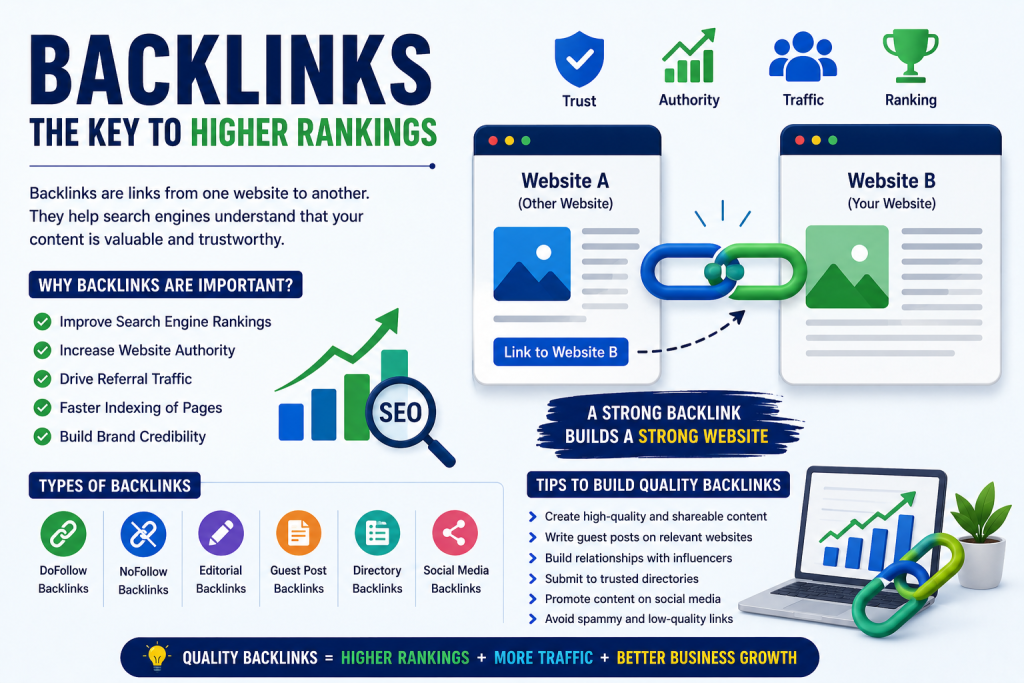
Backlinks, also known as inbound links or incoming links, are hyperlinks from one website to another. When Website A links to Website B, Website B receives a backlink.
For example, if a popular digital marketing blog links to your SEO article, that link is considered a backlink for your website.
Search engines use backlinks to evaluate the trustworthiness and authority of a website. Websites with strong backlink profiles often rank higher in search engine results pages (SERPs).
Why Are Backlinks Important?
Backlinks are important because they help search engines determine the value and credibility of a webpage. Here are some major benefits of backlinks:
1. Improve Search Engine Rankings
Google considers backlinks as one of its ranking factors. High-quality backlinks signal that your content is valuable and trustworthy, which can improve rankings.
2. Increase Website Authority
Backlinks from reputable websites help build domain authority and trust in the eyes of search engines.
3. Drive Referral Traffic
Visitors can click backlinks from other websites and land on your site, bringing targeted referral traffic.
4. Faster Indexing
Search engine crawlers discover new pages through backlinks, helping your content get indexed faster.
5. Build Brand Awareness
When your website is mentioned and linked on popular platforms, more users become aware of your brand.
Types of Backlinks
Understanding different types of backlinks is important for building an effective SEO strategy.
1. DoFollow Backlinks
DoFollow backlinks pass SEO value, also known as link juice, from one website to another. These backlinks directly contribute to improving rankings.
2. NoFollow Backlinks
NoFollow backlinks contain a special tag that tells search engines not to pass link authority. While they may not directly impact rankings, they can still drive traffic and increase visibility.
3. Editorial Backlinks
These backlinks are naturally earned when other websites find your content useful and link to it voluntarily.
4. Guest Post Backlinks
Guest posting involves writing content for another website and including a backlink to your own website.
5. Directory Backlinks
These backlinks come from business directories and listing websites.
6. Social Media Backlinks
Links shared on social media platforms can increase content exposure and traffic.
What Makes a Good Backlink?
Not all backlinks are equally valuable. A quality backlink has the following characteristics:
Relevance
The linking website should be related to your niche or industry.
Authority
Links from authoritative websites carry more value than links from low-quality websites.
Organic Placement
Backlinks placed naturally within content are more beneficial than links placed randomly.
Traffic Potential
A backlink from a website with active visitors can drive referral traffic.
Trustworthiness
Links from trustworthy websites improve your site’s credibility.
How to Build High-Quality Backlinks
Building quality backlinks requires effort and strategy. Here are some effective methods:
1. Create High-Quality Content
Content is the foundation of backlink building. Informative, unique, and engaging content naturally attracts backlinks.
2. Guest Blogging
Writing guest posts for reputable websites helps earn valuable backlinks while reaching new audiences.
3. Broken Link Building
Find broken links on websites and suggest your content as a replacement.
4. Create Shareable Resources
Publishing guides, infographics, case studies, and research reports can encourage others to link to your content.
5. Build Relationships
Networking with bloggers, influencers, and industry experts can lead to backlink opportunities.
6. Submit to Business Directories
Listing your website in reputable business directories can help generate backlinks.
7. Use Social Media Promotion
Sharing content on social platforms increases visibility and the chances of earning backlinks.
Common Backlink Mistakes to Avoid
Many beginners make mistakes while building backlinks. Avoid these common errors:
Buying Backlinks
Purchasing backlinks violates Google’s guidelines and can lead to penalties.
Using Spammy Websites
Links from low-quality or spam websites can harm your SEO performance.
Focusing Only on Quantity
A few high-quality backlinks are more valuable than hundreds of poor-quality links.
Ignoring Relevance
Backlinks should come from websites related to your niche.
Over-Optimized Anchor Text
Using the same keyword-rich anchor text repeatedly can appear unnatural.
Backlinks and Google Ranking
Google uses backlinks as a signal to evaluate website quality and relevance. Websites with strong backlink profiles often perform better in search results. However, Google focuses on backlink quality rather than quantity.
A single backlink from a trusted authority website can be more beneficial than multiple links from low-quality sources.
Therefore, website owners should focus on earning natural and relevant backlinks instead of trying to manipulate rankings through artificial link-building techniques.
Best Tools for Backlink Analysis
Several SEO tools can help analyze and monitor backlinks:
- Ahrefs
- SEMrush
- Moz Link Explorer
- Google Search Console
- Ubersuggest
These tools provide information about backlink quality, referring domains, anchor text, and competitor backlinks.
Benefits of a Strong Backlink Profile
A strong backlink profile offers several advantages:
- Higher search engine rankings
- Increased organic traffic
- Improved website authority
- Better brand recognition
- Faster content discovery
- More referral traffic
- Long-term SEO growth
Conclusion
Backlinks are a vital component of any successful SEO strategy. They help search engines determine the authority, relevance, and trustworthiness of a website. By earning high-quality backlinks from reputable and relevant websites, businesses can improve their rankings, increase traffic, and build a stronger online presence.
Instead of focusing on the number of backlinks, prioritize quality, relevance, and natural link-building practices. A strong backlink strategy can provide long-term SEO benefits and contribute significantly to the success of your website.