Introduction
A Website Audit is an essential process for evaluating the overall health and performance of a website. It helps identify technical issues, SEO problems, user experience concerns, and opportunities for improvement. Whether you run a business website, blog, or e-commerce store, conducting a Website Audit regularly can help improve search engine rankings, increase traffic, and enhance user experience.
In today’s competitive digital world, simply having a website is not enough. Your website must be optimized for search engines, mobile devices, page speed, and user engagement. This is where a Website Audit becomes important.
This guide will explain what a Website Audit is, why it matters, its benefits, and how to perform a complete Website Audit step by step.
What is a Website Audit?
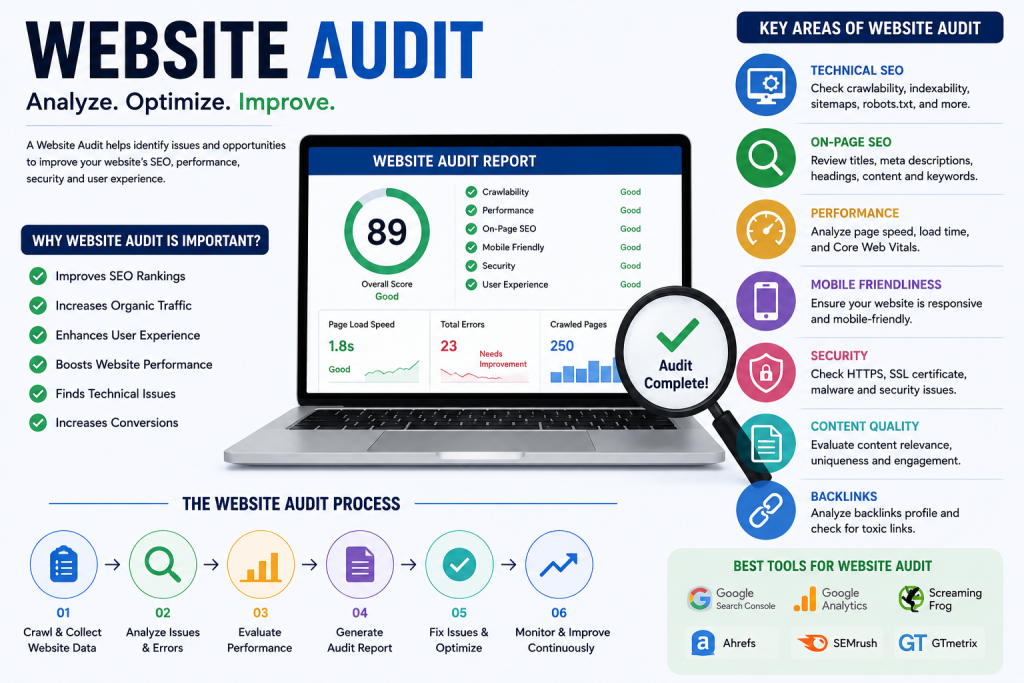
A Website Audit is the process of analyzing a website to evaluate its performance, SEO effectiveness, technical health, content quality, and user experience. It helps website owners identify issues that may affect rankings, traffic, and conversions.
A Website Audit examines multiple aspects of a website, including:
- Technical SEO
- On-Page SEO
- Website Speed
- Mobile Friendliness
- Content Quality
- Security
- User Experience
- Backlinks
The goal of a Website Audit is to identify weaknesses and implement improvements that help the website perform better.
Why is a Website Audit Important?
Performing a Website Audit is important because websites can develop issues over time that affect their performance.
1. Improves SEO Performance
A Website Audit identifies SEO issues such as broken links, missing meta tags, duplicate content, and indexing problems.
2. Enhances User Experience
Visitors are more likely to stay on a website that loads quickly and provides a smooth browsing experience.
3. Increases Website Traffic
Fixing technical and SEO issues discovered during a Website Audit can improve search rankings and drive more organic traffic.
4. Improves Conversion Rates
A well-optimized website encourages visitors to take desired actions, such as making purchases or filling out contact forms.
5. Identifies Technical Problems
A Website Audit helps detect issues that may prevent search engines from crawling and indexing your website properly.
Types of Website Audits
1. SEO Audit
An SEO audit focuses on improving search engine visibility by evaluating:
- Meta titles
- Meta descriptions
- Keywords
- Internal linking
- URL structure
2. Technical Audit
A technical audit examines:
- Website speed
- Crawlability
- Indexing issues
- XML sitemap
- Robots.txt file
3. Content Audit
A content audit evaluates the quality and relevance of website content.
4. Mobile Audit
This audit ensures that the website performs well on mobile devices.
5. Security Audit
A security audit checks for HTTPS implementation, malware risks, and website vulnerabilities.
Key Elements of a Website Audit
Website Speed
Website speed is a major ranking factor. Slow-loading websites can increase bounce rates and reduce user satisfaction.
You can test website speed using tools like:
- Google PageSpeed Insights
- GTmetrix
- Pingdom
Mobile Friendliness
Most internet users browse websites using mobile devices. A Website Audit should verify that all pages are mobile-friendly and responsive.
On-Page SEO
A Website Audit should review:
- Title tags
- Meta descriptions
- Heading structure
- Keyword usage
- Image optimization
Broken Links
Broken links create a poor user experience and can negatively impact SEO. Identifying and fixing broken links is a crucial part of any Website Audit.
Website Security
A secure website protects user information and builds trust. Ensure your website uses HTTPS and has a valid SSL certificate.
Internal Linking
Proper internal linking helps users navigate the website and assists search engines in understanding page relationships.
How to Perform a Website Audit
Step 1: Check Website Crawlability
Use Google Search Console to identify crawl errors and indexing issues.
Step 2: Analyze Website Speed
Test page loading speed and optimize images, code, and server performance where necessary.
Step 3: Review Mobile Performance
Ensure your website functions correctly across smartphones and tablets.
Step 4: Evaluate SEO Elements
Check:
- Title tags
- Meta descriptions
- Headings
- Keyword optimization
Step 5: Identify Broken Links
Use SEO tools to find and fix broken internal and external links.
Step 6: Review Website Content
Ensure content is:
- Relevant
- Unique
- Up-to-date
- Valuable to users
Step 7: Analyze Backlinks
Review your backlink profile and remove toxic or spammy backlinks if necessary.
Step 8: Check Security Features
Verify SSL certification and scan for security vulnerabilities.
Best Tools for Website Audit
Several tools can help perform a professional Website Audit.
Google Search Console
Provides insights into indexing, performance, and technical issues.
Google Analytics
Helps monitor traffic and user behavior.
Screaming Frog SEO Spider
Useful for identifying SEO and technical issues.
Ahrefs
Provides detailed backlink and SEO analysis.
SEMrush
Offers comprehensive Website Audit reports.
GTmetrix
Analyzes page speed and performance.
Common Website Audit Mistakes
Many website owners make mistakes when conducting a Website Audit.
Ignoring Mobile Optimization
A website that performs poorly on mobile devices can lose traffic and rankings.
Not Fixing Technical Errors
Identifying issues without implementing fixes limits the effectiveness of the audit.
Overlooking Broken Links
Broken links negatively impact user experience and SEO.
Ignoring Content Quality
Outdated or duplicate content can reduce search engine visibility.
Focusing Only on SEO
A complete Website Audit should evaluate technical performance, security, and user experience as well.
Benefits of Regular Website Audits
Performing regular Website Audits provides several long-term benefits:
- Better search engine rankings
- Increased organic traffic
- Improved website speed
- Enhanced user experience
- Higher conversion rates
- Stronger website security
- Better content performance
- Improved mobile usability
Regular audits help ensure your website remains competitive and aligned with search engine guidelines.
Conclusion
A Website Audit is a crucial process for maintaining a healthy, high-performing website. It helps identify technical issues, improve SEO, enhance user experience, and increase website traffic. By conducting regular Website Audits, website owners can stay ahead of competitors and ensure their websites continue to perform effectively.
Whether you are a beginner or an experienced digital marketer, making Website Audit a regular part of your SEO strategy can lead to long-term success and better online visibility.